Actually based on a big band orchestra song from the 1950s by Perez Prado. Ie this one:

A blog devoted to the Tommy Thunder and The Aether Age pulp fiction series. It's Dieselpunk fiction at its pulpiest with two-fisted brawls, biplane dogfights, mysterious safaris, Prohibition gin-running and swanky art-deco speakeasy hopping as far as the eye can see.
Showing posts with label Dieselpunk. Show all posts
Showing posts with label Dieselpunk. Show all posts
Tuesday, 2 July 2013
Dieselpunk Song of the Week - Mambo Number 5 by Lou Bega.
Actually based on a big band orchestra song from the 1950s by Perez Prado. Ie this one:

Thursday, 18 April 2013
1920s Mugshots of Batman Villains.
 |
| The Clown Prince of Crime, Dieselpunk style. |
This is awesome! An artist named Jason Mark has done up a series of 1920s-style mugshots for several Batman villains post-Batman encounter. There's also an Australian connection as the original mugshots that inspired the series is from our glorious little convict country. So I have 1920s (my favoured part of the Diesel era), superheroes (as pulpy as you can get, thank you very much) and Australia (Aussie Aussie Aussie...), all in one awesome, Dieselpunky package. How do you get better than that?
Click the piccy above to see the artist's website or check out Design Taxis website for more info on the original inspiration pics. The rest follow.


Wednesday, 27 March 2013
Dieselpunk Manifesto: Art Deco, Bond and the Cool Curve pt 4.
Send in the Spies...
In previous posts I’ve argued that the Art Deco movement was
part of a process that saw the cultural authority of the upper classes shift to
middle class producers. These middle class producers would dictate taste for
the vast majority of society in the Post-War middle class consumer-nirvana. In
this way the Art Deco movement not only illustrates the changing of the guard
but, for many, embodies a set of ideals and qualities associated with a
completely different era and way of thinking. An era with its own symbols and
cultural practises that provoke this very different ideology.
To frame it in a controversial light – the previous era was
the last era of elitist culture. To frame it in another ‘less provocative’
light – the previous era was the last era of meaningful class and style.
 |
| A previous era of cool... |
So in the face of this new rise of middle class cultural
practise – complete with its new youth-driven cultural movements – there were
many who resisted what was happening across society. Although the changes were
new and exciting they were also troublesome and potentially dangerous. In the
face of this cultural chaos, people needed a new breed of heroes to make sense
of it all.
One of those new heroes arrived in 1962. Mister Bond, James
Bond...
James Bond wasn’t the first spy to make it to screen. Far
from it. The spy genre had been percolating away in the background of Hollywood
for decades with plenty of World War 2 war films and Detective pulp stories segueing
neatly into and out of the genre. This was often built on a healthy diet of
popular pulp characters, especially in Britain where characters like The Saint and Bond himself proliferated.
But none of these had the cultural clout of the film version of the MI6 agent
with an obsession for mixing his martinis just so.
 |
| The Saint in New York, a 1938 film and series that proceeded Bond. |
The genesis of the Bond series was however boosted by the
British penchant for spy television series. Being an English-speaking market
located so close to the Cold War hub of central Europe probably helped, and saw
the creation of several series that while successful, weren’t break out hits in
a global sense, lacking the market clout of an American audience. Two of the
most famous were The Avengers and Danger Man, two series that while
attracting a decent local audience and slowly filtering out to become cult
classics across Europe and other markets, didn’t really take off because they
didn’t attract enough American attention. They were, however, good examples of
the unique British spin on the gentleman spy that would provide the unique
pattern by which Bond would capture the world.
 |
| The Real Avengers. |
But in 1962 James Bond swaggered onto cinema screens in the
break out hit Dr No and the spy genre
would never be the same again. A dashing gentleman spy like those who had gone
before him, Bond also added a wry sense of humour and more than a few lashings
of adventure, sex appeal and cheeky bombast to create what would become the
archetypal spy movie.
The character quickly grew into a phenomena, not only
spawning an endless run of sequels but also its own genre as film, television
and pulp producers started churning out spy fare for the hungry masses who
couldn’t get enough. By the mid 1960s not only did Bond have several sequels
but television shows like The Man from
U.N.C.L.E, The Saint and Mission: Impossible were springing up everywhere while shows like The Avengers and Danger Man were called back for encores. A mark of the health of
the genre was that not only did these new shows gain their own rabid mainstream
fan bases but other characters and stories sprung up to try and refute the stereotypes
put forward by the Bond films, examples such as the Flint series of films.
Flattery doesn’t always come in the form of a copycat, a jealous backlash often
works just as well.
And like vampire/werewolf stories today, the stories kept
proliferating.
Popular genres often have a half life by which writers use
up every possible scrap of storytelling available to a genre, exhaust the
supply, then move on to the ‘next big thing’ in a storm of parody. The
appearance of these parody versions often marks the end of a genres ‘Golden Age’
as writers no longer take the genre seriously. The few genres that escape this
process become meta-genres that become so vast and portable that they often
show up across a range of other genre stories whenever they can be useful,
watering down the genre tropes to their bare essence. A good example of this
would be the action or adventure ‘genres’ which are so broad you usually need
another adjective to define a movie, such as ‘it’s a sci-fi action/adventure
movie’ or ‘it’s a spy action/adventure movie’.
 |
| Not really taking the spy genre seriously... |
It could be argued that the spy genre well and truly reached
this phase with the popular spoof series Get
Smart, which parodied the genre
mercilessly as the genre died down at the end of the 60s. In its brief but
influential heyday the spy genre had held audiences in thrall on both sides of
the Atlantic, providing a hero that audiences wanted to see over and over again
in many different guises. This new hero saved the (Western) world from vast
government-based conspiracies launched by foreign powers, while enjoying the
thrills and spills of action and adventure that went with the urbane and global
jetsetting of the ‘spy lifestyle’. It was classy, it was cool, and it provoked
a Euro-centric style that refuted current youth lifestyle trends for the upper
class refinement and sensibility that was once the height of fashion. But the
rise of Get Smart signalled that the spy genre was becoming just another
television genre and much of the steam had been used up, the genre drifting
back into obscurity or blending with other genres, such as the spy/heist combination
of the long running Mission: Impossible. The genre was there in the
background but not the dominant force of storytelling it once was.
With one exception: Bond himself.
 |
| Still going strong. |
In a world where Hollywood and the television industry would
move on to different headlining heroes and different genres of action/adventure
storytelling the Bond series would go on to be the most successful (inflation
adjusted) and longest running movie franchise of all time. And with the current
box office success of the latest Bond film Skyfall,
that run doesn’t appear to be stopping any time soon.
So why has the Bond series not only outlasted its
contemporaries but gone on to be a phenomenal cultural success? Why is Bond a
staple of Hollywood action/adventure storytelling, a British gentleman spy in
amongst a sea of American military hardware toting gunslingers and
revenge-seeking policeman or gangsters?
 |
| The heroic competition... |
Stay tuned for the final episode of Bond, Art Deco and the
Cool Curve...
Monday, 18 March 2013
Dieselpunk Manifesto: Art Deco, Bond and the Cool Curve pt 3.
Depression era
aspirations – the beginning of a habit.
One of the most enduring images of Depression era film is
the rise of the musical, a somewhat bizarre cultural artifact trend for such a
horrendous time if you only take it on face value. Musicals, in general, are
considered a celebration of life. That’s what they do – take life and give it
song and dance, no matter how mundane the topic actually is. So why were they
so popular in the years of the Great Depression?
The easy answer is escapism and the ability to teleport into
another world for a few hours. Moviegoers, through the lens of the musical,
could experience the decadence and splendor of a lifestyle none in the crowd could
actually attain, all for the price of admission. There they could sing and
dance and indulge themselves, projecting their ideas of the high life and what
it would be like up onto the silver screen. The creators of these films
therefore became accomplices in shaping what it was that people aspired to.

There were many culprits responsible for the
glamour-in-the-midst-of-hardship escapism of the film musical during the 1930s but
perhaps the most culpable was a bloke by the name of Fred Astaire. One of the
most enduring images of the era, not to mention Art Deco itself, is this bloke
gliding around on the screen in top hat and coat tails, an image that was burnt
into the consciousness of movie goers in the 1935 smash hit Top Hat.
It wasn’t the first time Astaire would inhabit that famous persona, and
certainly not the last, but the film established Astaire and his dance partner
Ginger Rogers as top billing performers and created an archetype that still
resonates with movie lovers today. He would glide around the screen
effortlessly, she would appear to be having a ball wearing those stylish gowns,
and together they not only saved RKO with some of the biggest box office hits
of the decade but also helped define the era, the genre and set the bar for
elegance and style.
All this deep in the Depression.
My argument in this series of posts is that the
Astaire/Rogers films and others of a similar ilk created in the minds of cinema
goers an idea of ‘living the high life’ that took on an aspirational life of
its own. In a world where people were starting to reach for and adopt Art Deco
style for themselves, it was brutishly ripped from their grasp by the stock
market collapse, leaving a longing that turned into an oft sought Art Deco
wonderland in the minds of cinema viewers everywhere. A world of fancy suits,
ritzy places to hang out in exotic locations, glamorous women of a sparkly
dress-wearing persuasion, all set to an Art Deco design palette. The sort of
world the upper crust apparently existed in. And it was a set of ideas that
spent the better part of two decades simmering and seeping into the collective
cinema vocabulary.
But with the easing of the Depression and the rebuilding of
the middle class in the late 1930s (neither projects being completed before the
outbreak of World War 2) the early adopter cycle restarted with a vengeance. The
march of Art Deco continued but now people weren’t content to simply add
decoration to their Modernism. Technology had continued to develop in that lost
half decade of consumer stasis and the most Modern thing you could do now was
streamline things, a natural progression of the ever-present ‘speed lines’ of
Art Deco. This streamlining craze thus marked the ‘late phase’ of the descent
of Modernism from the elitist pursuit of academics just as the rise of the
middle class was changing the face of consumerism for the next fifty years. Passing
via the rich and fashionable young decodents, Modernism had morphed down to the
upper middle class via an aspirational technology-based consumption that then reached
its final stage with people streamlining everything they possibly could,
including toasters, radios and other middle class objects adopted by an
enthusiastic new middle class after the War.
 |
| The humble radio: an object that (technically speaking) does not require an aerodynamic profile. |
By the 1940s Art Deco was finally starting to reach middle
adopters, now that it had been synthesised down into something palatable for wholesale
mass consumption, but it is was also in the 1940s that Art Deco would cease to
be a force in design.
By the late 1940s America and the rest of the world had
changed. What had started as a gradual process of the rising middle-class
became a veritable stampede with the post-War boom in America and the new
popular culture it began to produce. Cultural products were no longer being
produced from the top down. In a remarkable historic shift, culture was now
being set by the middle class and a previously invisible cadre of leisure-lifestyle
beings, the ‘teenager’. Where the upper classes previously dictated fashion,
now the middle class with their casual wear and popular music were setting the
cultural zeitgeist. It was new world, the affects of which cannot be
understated.
 |
| Paris had little influence on the fashion choices of these gents. |
So the Diesel era was a transitional period which marked a
remarkable shift in power from the upper class taste that dictated the cultural
vanguard at the start of the century, only to lose their cultural authority to
the middle class who from the 1940s took on the mantle of trend setters for the
rest of the nation and the world. By the 1950s music no longer came from the
music hall, now it came from young guitar-wielding fiends ceaselessly playing a
four beat bar. Fashion innovation was no longer solely from Milan or Paris, now
it was funny boy band haircuts from England or bell bottom jeans from America. Academic
disciplines were now dominated by enthusiastic middle class kids pouring into
these once exclusive institutions, bringing with them ideas that originated in
their own lifestyle and class. Now everyone
had an automobile and no one went to the opera because they could stay home and
watch Gunsmoke or The Man From U.N.C.L.E.
 |
| Soaking in some culture. |
But ideas don’t die, they just get reused. Although the
mantle of cultural authority shifted to the middle class in the 1950s it didn’t
kill off the ideas formed in the 1930s. In fact, in a world dominated by casual
wear and popular music, the past with its upwardly-focussed aspirations could
be quite appealing for those who were not completely sold on the idea of rock
music or t-shirts worn without a shirt. Some people preferred ‘Easy Listening’
music and a well dressed man with class. In a world beset by all sorts of
problems, both at home and abroad, some people were looking for a different
sort of hero, one that not only embodied the old-school values that rejected
all this crass nonsense that immature, ignorant people were indulging in at the
time but a hero who would focus on the real dangers facing society, namely
those pesky Soviets. What they wanted... was someone who drank dirty Martinis, not someone who smoked pot.
 |
| Hard to believe, but many people in the 60s didn't think people like this ^ were taking the 'Soviet problem' seriously enough. |
Did the people get what they want? Did someone step up to
save the nation from both the Russians and a descent into casual wear hell?
Stay tuned next post as our hero is revealed... and it might not be who you
think it is...
Sunday, 3 March 2013
Pulp Manifesto: A Pulpy (Alternate History) World To Live In.
In honour of the posting of my short story over at the
Alternate History Weekly Update blog I thought I’d post a bit about the
alternate history aspects of The Aether Age and the world Tommy lives in.
Originally I was going to wait a while until getting into the nuts and bolts of
my alternate timeline (mostly because I still have plenty of research to do)
but I’ll start by giving a vague run down of the key points that make The
Aether Age a bit different to The Jazz Age that existed in our own history.
There are only two key differences separating the Aether Age
from the Jazz Age but as every student of history knows, everything rides on
those key moments. And the key moment for The Aether Age occurs much earlier
than the 1920s. It occurs in 1803 with the signing of the Louisiana Purchase,
the contract by which the United States of America bought France’s claim to a
huge slab of land west of the Mississippi river for the paltry sum of 15
million dollars.
 |
| The original Louisiana Purchase superimposed over a modern map. |
In the Aether Age timeline the deal went ahead as planned
except for one minor detail – a line written into the contract stating that
France retained an option to buy back the land at a future date if they so
wished, at the going market rate. This small line of legal technicality just
sat there, and nothing happened for over a century.
The second difference in the Aether Age timeline was the
mysterious discovery of a new element – aether. This gas was first heard of
just before the outbreak of the Great War and was quickly exploited in order to
make zeppelin technology more efficient. This came both from its incredible
lifting power, which far outranks helium, as well as its ability to easily
transform from a gas to a liquid which allows for greater buoyancy and ballast
control. It also helps that the gas is inert except under extreme conditions.
 |
| Yep, that Aether is workin' pretty good. |
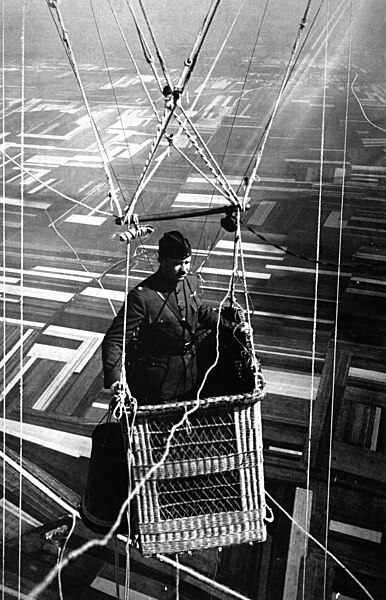 |
| It better be... |
While the element was only just being utilised at the
outbreak of the war its influence was enough to bump flight technology far enough
along to drag out some of the worst battles in the conflict and allow
journalists greater access to the battlefields of the Western Front via private
aircraft. This became a propaganda nightmare for not only the English but their
enemies as well. The English press first began releasing unadulterated footage
and photographs of the European carnage which flew in the face of previously
upbeat military reports, then other European press agencies did likewise. Confronted
directly with the horror of the war, the public will for conflict began to
wane, the war dragged out, and The Lull of late 1918 ended with the Armistice
of late 1919, a ceasefire which resulted in an immediate cessation of
hostilities but not much more. By the 1920s large swaths of Europe are still
stretches of barbed-wired No Man’s Land and all sides warily eye each other off
as they rebuild their war machines.
.jpg/449px-Armisticetrain_(slight_crop).jpg) |
| This never happened in the Aether Age: The 1918 Armistice. |
For the French this meant a ruined nation with the threat of
an imminent return to warfare. With there being no end to the confrontation in
sight the French government looked to the English strategy of evacuating many
of its children to their colony of Canada in the hope of sparing them the
incessant zeppelin attacks that plagued the British Isles. In their desperation
the French explored all of their own options for a similar strategy. It was
then that they were able to find the long lost clause in the Louisiana Purchase
contract that would allow them to buy back a large slab of the United States.
Were this purchase a success they would be able to provide their most vulnerable
citizens with a refuge from the wars of Europe, as well as the economic base
from which to continue their Western Front defences.
Needless to say, their initial overtures were met with a
somewhat... muted reception. The United States was still divided about being
involved with the war in a production capacity, let alone joining, and large
rifts were forming between various states over the decision. However, no state
advocated the selling of a large portion of the country, even if it was on the
say so of a legal document of vague authority.
 |
| But along came some villains... |
But a large cabal of New York industrialists and bankers
were interested in the offer. At the going rate for property in the United
States the country would make a mint selling off a significant part of its land.
And if it was somewhere insignificant like – oh, Louisiana – then wouldn’t that
be a price worth paying to receive France’s gold stockpiles and become the bank
of the world, no matter what side of the Great War potential customers were
fighting on?
What followed was a backroom deal that scandalised the
nation. The consortium of industrialists and bankers sold the state of
Louisiana to the desperate French, received the French gold, and then were
amazed at just how outraged the rest of the country were. Outrage against New
York quickly led to threats from other states, the worst being from Chicago
which organised its own militia which in turn led to a tense stand off in which
the nation braced itself for potential civil war.
 |
| It was only Louisiana. Why are you all so angry? |
New York attempted to compensate by appealing to the citizenry,
especially the rural heartlands. However their actions, such as aggressively
backing the new and somewhat popular 18th Amendment instituting
Prohibition, backfired, further alienating certain states who went so far as to
threaten to secede if New York continued having so much say in political
matters. It did not help that New York also began to benefit greatly from its
newfound wealth and armed its own militia in case Chicago did attack.
In a turning point for the nation, a headline stealing threat
was made by Washington and Oregon senators to secede to Canada if New York did
not stop interfering via the Prohibition act. This was then met by disdain and
arrogant insult from a young New York industrialist during a newspaper
interview. The interview caused another scandal. And Washington and Oregon
promptly made good on their threat.
 |
| A Seattle resident from the Age of Aether. |
A call by federal authorities to use military action and
bring the states back fell on deaf ears and, while the potential for
reconciliation was high, further events soon made it impossible. Seeing the
Union crumble under the leadership of New York’s robber barons, other states
began to reclaim federal powers for themselves, including the ability to
institute standing militias.
Then, in a move that would irrevocably change the course of
the United States of America, Texas held a referendum concerning their
participation in the Union. By a slim margin the vote was won for independence
and Texas reclaimed its status as a republic, a move that saw California and
then the Midwest states quickly follow suit. Soon the powerbrokers of New York
and Washington DC were left ruling a ‘United States’ bordered by Canada to the
North, the MidWest Commonwealth to the west and the New Confederate Federation
to the south, which itself was making gestures of war towards the Nouveau
Republique de Mississippi to the south west. The Union was well and truly gone.
 |
| Viva Le Lone Star Republic. |
In the power vacuum that has followed the North American
continent has been in turmoil. Not only has there been a civil war in Canada
(which Churchill, in disgust, christened ‘the most polite civil war to have occurred
in this or any other age’) but the abundance of aircraft being manufactured on
the continent has prevented law and order forces holding sway on most of the
boundary territory far from urban areas. Everything west of the Mississippi and
north of Texas is now considered the ‘New West’ with the region falling into
economic turmoil thanks to constant skypirate raiding and a mass exodus from
urban areas, often west to California which now dubs itself CaliModerna. Both
highways and railways were soon torn apart in economic battles between airplane
armed groups until zeppelin cargo shipping became the only cost effective
method of transporting goods with any certainty that they would reach their
destination. And with the rise of criminal empires thanks to the Prohibition
act urban politicians cling to in order to appease their rural constituencies,
often police and militia forces are not the wielders of law and order they once
were.
 |
| This happens all over what was once the United States. |
Welcome to the Aether Age. Buckle yourself in :)
Subscribe to:
Posts (Atom)